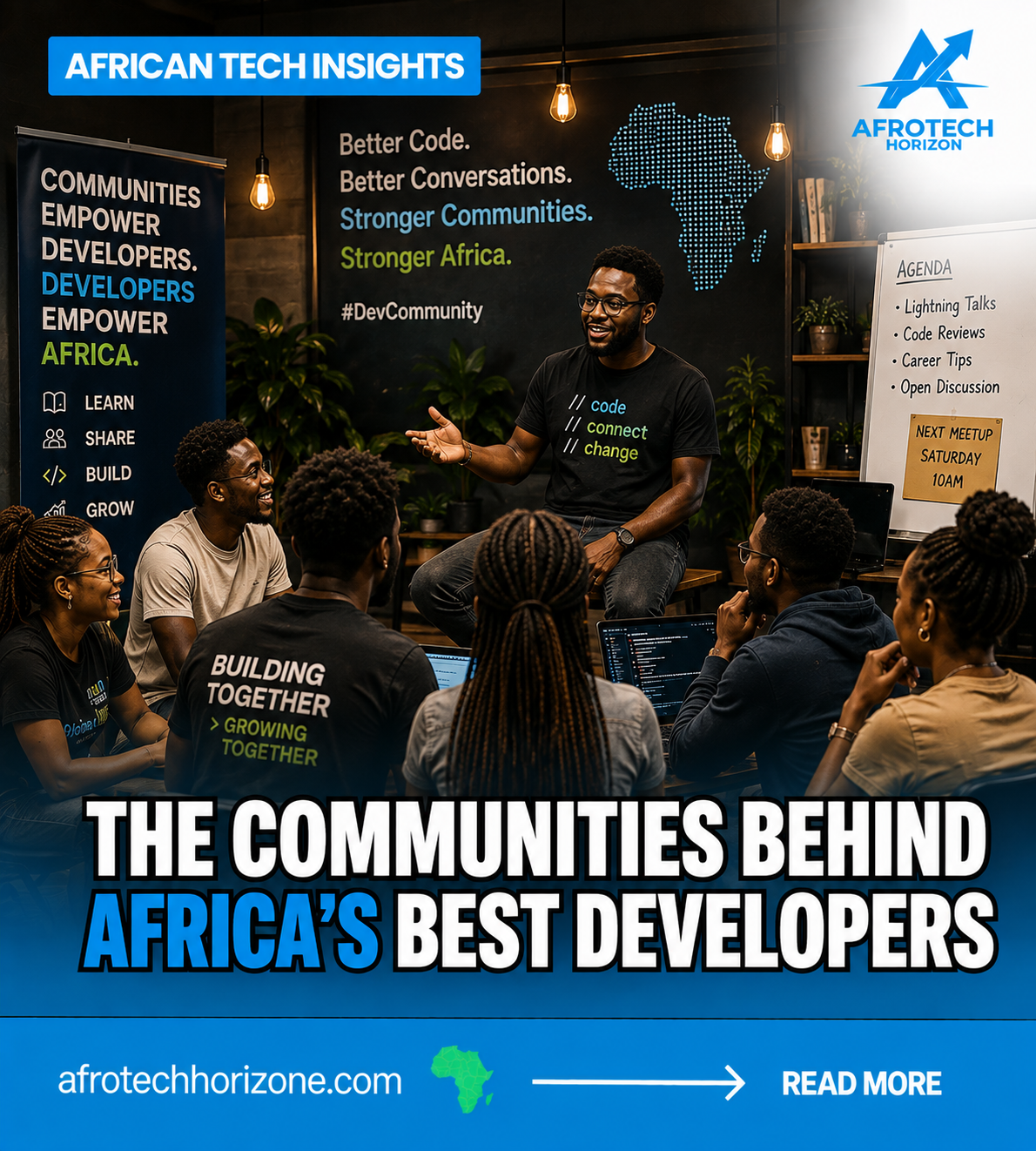
Ask engineers in most African cities how they learned what they know, and the answer very often involves a community rather than an institution — a language user group, a weekend meet-up, a Telegram or Discord channel, a conference organised by volunteers who took time off work to do it.
What communities provide that courses do not
A syllabus teaches a technology. A community teaches the surrounding judgement: which tools are worth learning, what a good code review looks like, how to interview, what a fair contract looks like, which employers pay on time. That knowledge is not written down anywhere, and it is the difference between someone who can complete a tutorial and someone who can hold a job.
Communities also handle the introduction problem. A very large share of engineering hires happen through someone who already knows the candidate's work, and a community is the mechanism by which people come to know each other's work.
The sponsorship cycle
Corporate sponsorship arrives when a company wants developers to adopt its platform, and it leaves when priorities change. Communities that build their operating model around that money struggle when it stops. The ones that persist tend to run cheaply on purpose — a room, a projector, someone willing to organise — and treat sponsorship as a bonus rather than a foundation.
The unglamorous ask
What organisers consistently say they need is not money but participation: people willing to speak, to mentor, to review, to take a turn organising so the same three people are not doing it for the fifth year running. Burnout among volunteer organisers is the most common reason a healthy community goes quiet, and it is entirely preventable.