Raenest, the Lagos-founded money app built for freelancers, remote workers and creators who earn in foreign currency, is trying to become more than a way to get paid from abroad. At its Raenest Exchange 2026 event in Lagos on 21 October, the company set out a wider product line: savings vaults with yield, stablecoin payments and a physical card.
The move matters because the market Raenest started in, helping Africans receive dollars, pounds and euros, is crowded. Adding places to park and grow that money gives users a reason to keep balances in the app rather than cash out straight away.
What Raenest announced in Lagos
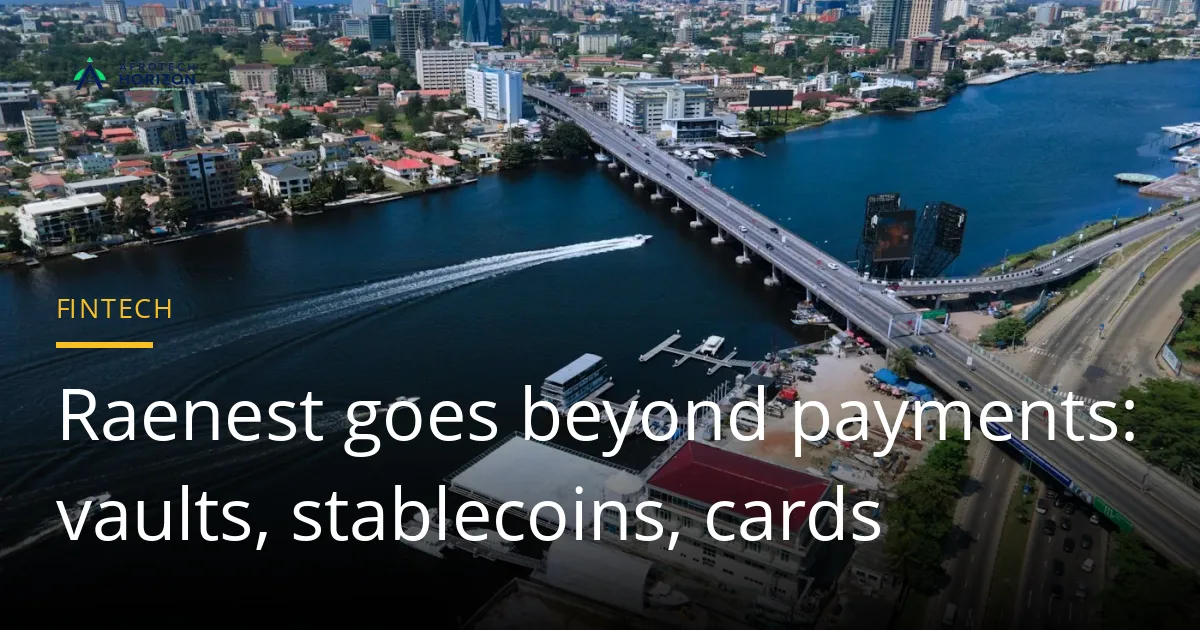
The second edition of Raenest Exchange took place at the Civic Centre on Victoria Island, with more than 30 speakers, according to the company's own recap published on 23 October. Three groups of products were announced.
Payments in stablecoins
Users can now send and receive USDC and USDT, the two largest dollar-pegged stablecoins, and convert them to naira, pounds or euros. Raenest's invoices and payment links accept bank transfer, card or stablecoin. Clients can also pay in Bitcoin, Solana or Ethereum, which Raenest converts to USDC automatically.
For a freelancer in Lagos billing a client in another country, that means one invoice that the client can settle in whichever way is easiest, with the money landing in a dollar-linked balance.
Raenest Vaults
Vaults let users hold US dollars, naira, USDC or USDT and earn interest. Raenest says yields reach up to 16% a year on naira and up to 7% on dollars and the two stablecoins. These are stated maximums, not fixed rates.
Cards
Users can run up to four virtual cards at the same time. The new physical card comes in two versions: a prepaid card funded separately, and a standard card that draws directly on Raenest balances.
How the stablecoin vault works
The stablecoin side of the vault launched a month earlier. Nairametrics reported on 22 September that eligible users in supported markets across Africa, Latin America and Asia can earn up to 7% variable APY on USDC and USDT, paid daily and added to the balance automatically.
Key terms from that announcement:
- The vault can be funded with stablecoins or with USD, NGN, GBP, EUR and other supported currencies, which are converted into the matching stablecoin.
- There is no lock-up period. Money can be added or withdrawn at any time, subject to terms and conditions.
- The yield comes from decentralised finance (DeFi) protocols.
"Stablecoins are becoming an important part of how people and businesses manage money across borders," chief executive and co-founder Victor Alade said in the September statement. "With Stablecoin Vault, we're giving users more ways to put their balances to work."
The risks users should understand
Raenest's own disclosures are clear that the vault is not a bank account and is not covered by deposit insurance. Because returns depend on DeFi protocols, they can change with market conditions and are not guaranteed. The company also warns that in exceptional circumstances the value of the assets could be affected.
Several details have not been published. The September announcement did not name the DeFi protocols used, the custody arrangements, the fees, or which countries count as supported markets. Anyone moving savings into a vault should read the terms in the app before doing so, and treat the top rate as a ceiling.
A 16% naira yield should also be read against Nigeria's high interest-rate environment, where government bills and bank deposits offer competing returns. The headline number looks generous in dollar terms but less so once naira inflation and exchange-rate risk are counted.
Who Raenest is and why it is expanding
According to the company's figures reported by Nairametrics, Raenest serves more than one million users in over 50 countries and has processed more than $2 billion in transactions. Its investors include QED Investors, Norrsken22, Ventures Platform, P1 Ventures and Seedstars.
The audience at its Lagos event showed who it is courting. Sessions featured YouTuber Tayo Aina, creators, remote workers and freelancers talking about pricing, global clients and AI tools. One panel on the "digital dollar economy" contrasted bank transfers to suppliers in China, which can take three to four days, with stablecoin transfers that settle almost instantly.
That is the pitch: people who already earn across borders want to hold and use that money in one place. Payment-only apps compete mainly on fees and speed. A wallet with savings, cards and invoicing has more ways to keep a customer.
What to watch
- Regulation. Nigeria's rules on digital assets and stablecoins are still developing, and products that pay yield on crypto balances draw close attention from regulators.
- Disclosure. Whether Raenest publishes which protocols generate the vault yield and how funds are held.
- Competition. Rivals serving the same freelancer and remote-worker market are adding similar stablecoin and savings features.
For more on how African fintechs are raising and spending money this year, read our report on the Nclude fund's $112 million close.