Nigeria's telecoms regulator wants every new phone checked before it reaches a network. The Nigerian Communications Commission (NCC) says its NCC device checker and an enhanced type approval framework, in force since 7 October 2026, will keep counterfeit, cloned and unapproved handsets off mobile networks. About 231 million devices already in use have been registered automatically, according to the commission.
The rollout also shows how much of Nigeria's phone supply has moved through channels nobody was tracking. TechCabal reported on 20 October that the tool is exposing gaps in the country's mobile import chain. Here is what has changed, who carries the burden, and what buyers should do before paying for a phone.
How the NCC device checker works
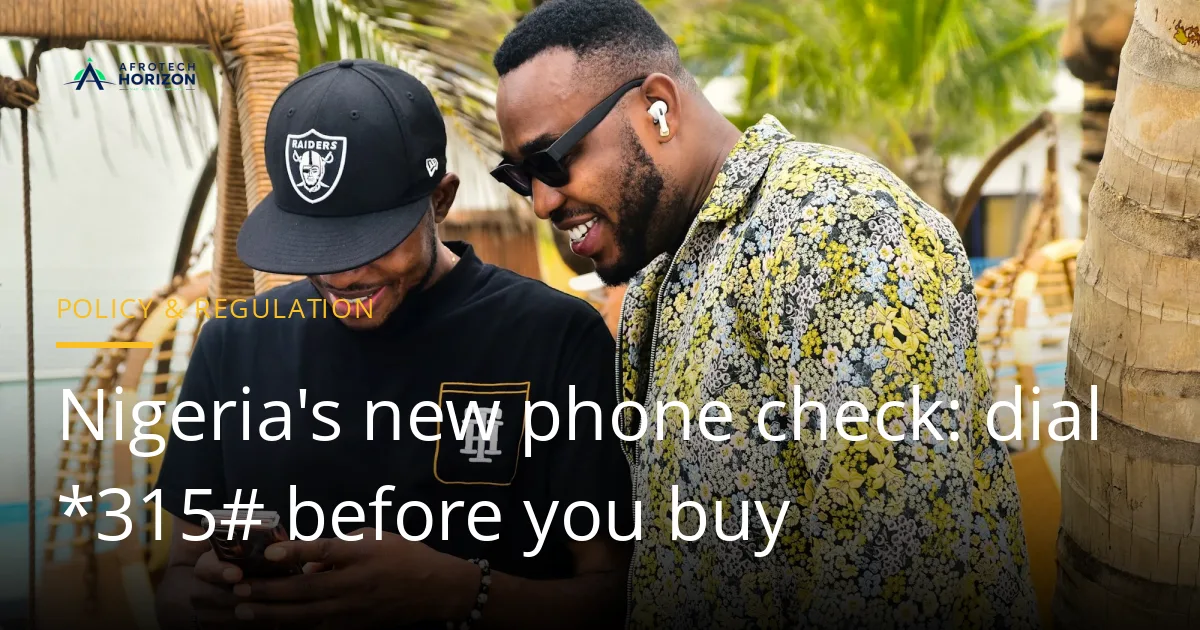
Anyone can check a device in two ways, according to the NCC and reporting by Techeconomy and Nairametrics:
- Dial *315# from the phone you want to check.
- Or visit the commission's Device Checker portal at ncc.gov.ng/devicechecker and enter the 15-digit IMEI number.
- To find a phone's IMEI, dial *#06#.
The checker covers more than smartphones. Techeconomy lists feature phones, cellular tablets, modems, eligible Internet of Things equipment and point-of-sale terminals, which matters in a market where POS agents sit on almost every street corner.
The legal basis is not new. Section 132(2) of the Nigerian Communications Act 2003 already requires communications equipment to be approved before it is sold or used in Nigeria. The current push builds on Type Approval Business Rules the commission introduced in August 2024. Edoyemi Ogoh, the NCC's Director of Technical Standards and Network Integrity, told journalists in Abuja that the aim is to "strengthen enforcement of existing requirements" rather than create a new obligation.
Existing phones are safe, new ones are not
The most common question since the announcement has been whether working phones will suddenly be cut off. The NCC's answer is no.
"We had already registered about 231 million devices across the country," Ogoh said at the briefing, as reported by Nairametrics. "We are not blacklisting those that have come up before this."
Devices connected to Nigerian networks before 7 October were verified automatically. The pressure falls on what comes next. Newly introduced devices must meet the commission's verification requirements before they can access networks, and the NCC says it is working with the Nigeria Customs Service, manufacturers, importers and dealers to authenticate stock before it reaches shop shelves.
That creates a clear split in risk:
- Existing users need to do nothing.
- Buyers of new or second-hand phones should check status before paying.
- Importers and dealers carry the compliance duty, since consumers are not expected to seek approval themselves.
Why imports are the weak point
Nigeria buys most of its phones from abroad, and a large share passes through informal traders, travellers and markets such as Lagos's Computer Village. Until now, a phone's route into the country left little trace once it was switched on.
The new system is designed to change that. According to the NCC, it will let regulators see which importer brought in a device, when, and in what quantity. That is the vulnerability TechCabal's reporting points to: once every handset has to be matched to an approved import record, the gaps in customs declarations and grey-market supply become visible.
Cooperation between the regulator and Customs has been building for a while. In September 2025, Customs Comptroller-General Bashir Adeniyi hosted NCC chief executive Aminu Maida in Abuja to discuss joint monitoring of telecom imports, training for customs officers and aligning tariff codes with regulated devices, according to an Economic Confidential column at the time. "Unchecked importation of mobile devices poses security risks," Adeniyi said then. Maida's line was that "one of the least understood factors affecting service quality is the device itself."
The network quality argument
The commission ties the checker to call quality as much as to fraud. Ogoh said counterfeit and faulty devices can interfere with network infrastructure and degrade service for other subscribers on the same cell site. NCC assessments found device problems alongside infrastructure limits, insecurity and flooding as causes of poor service.
This sits next to other quality measures. Quality of Service Regulations introduced in 2024 set targets for dropped calls, call setup success and congestion, and in March 2026 the NCC directed operators to compensate subscribers where service falls below standard. Better devices remove one excuse operators have used, though the bigger constraints remain the cost of building networks. We covered that side in our piece on why cheaper fibre fees have not sparked new infrastructure investment.
Privacy: what the checker can and cannot see
Any system that tracks devices invites the obvious worry. The NCC has been direct about it. "It is not a surveillance tool and does not provide access to personal information stored on devices," Ogoh said.
According to the commission, the system relies on device identification data such as IMEI numbers. It does not read messages, photos, contacts or financial records. The NCC has also warned consumers to use only official channels and never to share one-time verification codes with sellers or callers, since scams tend to follow any new government process.
There is a practical upside too. The framework supports identifying stolen phones and stopping their reuse on Nigerian networks once the reporting procedure is complete. In a country where phone theft is common, that could reduce the resale value of stolen handsets.
What buyers and sellers should do now
For consumers, the advice is simple:
- Before paying for any phone, new or used, dial *315# on it or run its IMEI on the portal.
- If the check fails, ask the seller for an explanation or a replacement. Techeconomy notes that a failed check does not by itself prove a device is fake.
- If the seller will not resolve it, report it to the NCC's toll-free 315 helpline.
For retailers and importers, the message is harder. Stock that cannot be matched to type approval is now a liability. Dealers in markets that rely on parallel imports will need paperwork they may never have kept, and the cost of getting it is likely to be passed on in prices.
What is still unclear
Several details have not been published. The NCC has not set out penalties for sellers or importers caught with non-compliant stock, and it has not said what happens to an unapproved phone bought after 7 October beyond advising buyers to seek a replacement. It is also not clear how the system will treat phones bought abroad by travellers and brought home for personal use.
Those answers will decide whether the device checker mostly protects buyers or mainly pushes the informal phone trade into new workarounds. For now, the safest move for anyone buying a phone in Nigeria is a 10-second check before handing over cash.