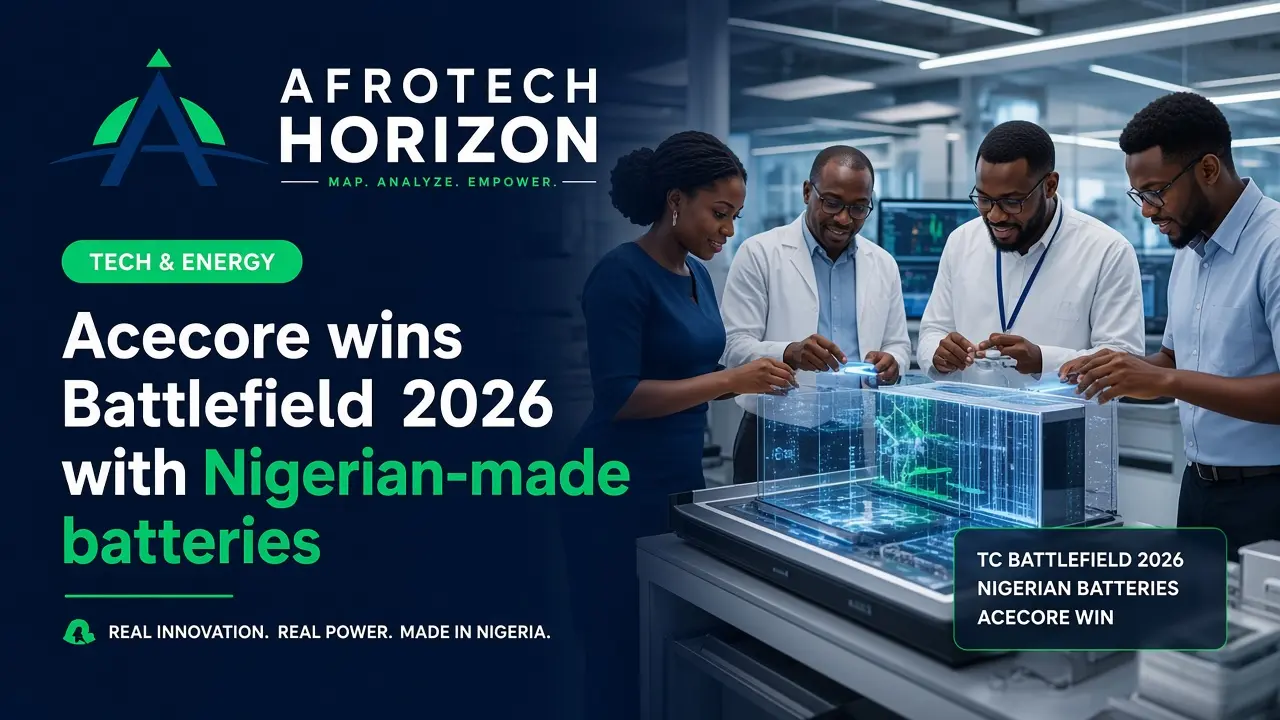
Nigerian clean technology startup Acecore has secured the top honor at the TC Battlefield 2026 early-stage pitch competition, hosted during the Moonshot by TechCabal conference at the National Theatre in Lagos. Emerging victorious over nine other finalist startups, the firm earned $10,000 in equity-free capital for its locally manufactured home energy storage solutions.
Manufacturing Local Power Solutions for Structural Grid Failure Founded by Caleb Iwuoha, Acecore builds clean-energy hardware tailored to solve persistent power instability across African households and enterprise locations.
Flagship Powercell Hardware: Producing modular battery storage units and integrated inverters designed and assembled locally in Nigeria to lower equipment costs.
Competitiveness Against Imports: Operating at a 62 per cent profit margin while competing directly against imported foreign energy systems on pricing and durability.
Hardware-Led Innovation: Demonstrating how physical hardware manufacturing in Africa can address core infrastructural bottlenecks alongside software services.
AI-Powered Energy Optimisation and Pitch Runners-Up Alongside hardware manufacturing, Acecore incorporates intelligent software controls to maximize battery lifecycle performance and grid independence.
Powercore Management Application: Utilizing artificial intelligence to track power generation, predict maintenance requirements, and optimize battery discharge routines.
First Runner-Up Supplya: B2B inventory financing and retail supply chain platform Supplya secured second place, taking home $5,000 in equity-free cash.
Second Runner-Up Navidyn: Advanced robotics startup Navidyn Limited finished in third place, claiming $2,500 for its underwater oil and gas inspection drones.
To explore further technical analysis on renewable energy hardware, energy storage infrastructure, and startup funding across Africa, visit AfroTech Horizon.
Proving Hardware Viability in African Tech Acecore’s victory at TC Battlefield 2026 underscores a growing pivot toward physical infrastructure innovations within the African technology ecosystem. By uniting indigenous battery manufacturing with AI-driven energy management, the startup demonstrates that locally built hardware can deliver sustainable business margins while solving critical energy challenges.