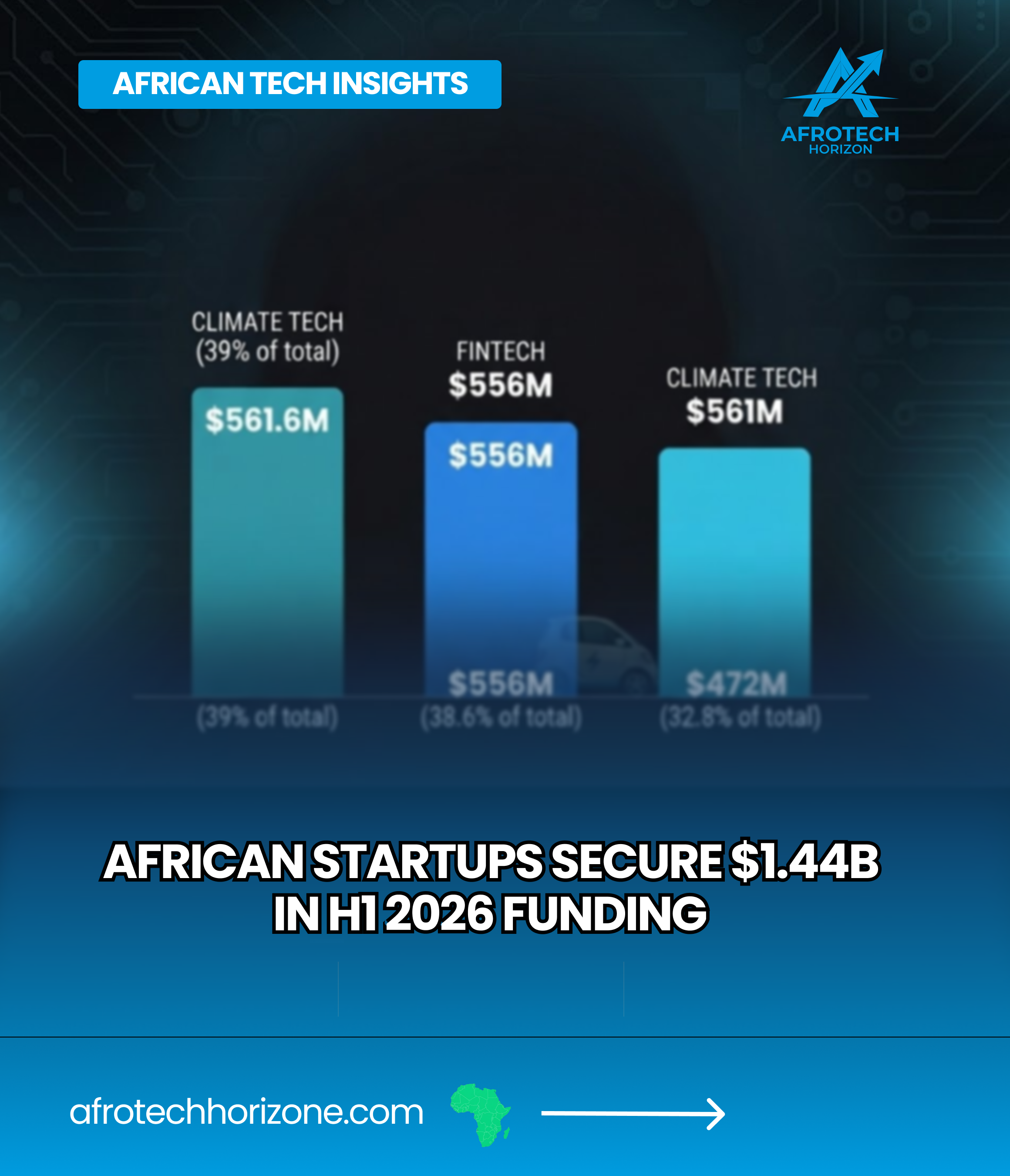
At first glance, the numbers tell a story of quiet resilience. According to the latest mid-year reports from Africa: The Big Deal and TechCabal Insights, African tech startups closed the first half of the year with Africa startup funding H1 2026 figures hitting $1.44 billion virtually matching the $1.42 billion recorded during the same period last year.
However, beneath the headline-grabbing figure lies a stark reality regarding Africa startup funding H1 2026: the rules of the game have fundamentally changed. The era of easy equity and hyper-growth at all costs is officially behind us. H1 2026 was defined by a massive structural rebalancing, one characterized by a steep drop in deal velocity, a historic wave of mergers and acquisitions (M&As), and an unprecedented surge in asset-heavy infrastructure.
1. The Barbell Effect: More Capital, Fewer Deals
While total capital injected into the ecosystem remained stable, it was distributed across a sharply reduced number of transactions. Only 146 disclosed deals were completed in H1 2026, representing a dramatic 42% decline from the 252 deals recorded in H1 2025.
When evaluating Africa startup funding H1 2026, analysts note a clear "barbell effect" across the continent:
The Elite Late-Stage: A tiny fraction of established, mature companies are vacuuming up the majority of available capital. Roughly half of all funding in H1 went to just seven major startups.
The Missing Middle: Early-stage and seed founders are facing unprecedented friction. The number of startups raising between $100k and $1 million has contracted severely, forcing early-stage operators to focus heavily on immediate unit economics and cash flow.
2. The Rise of Asset-Heavy Giants and Mobility
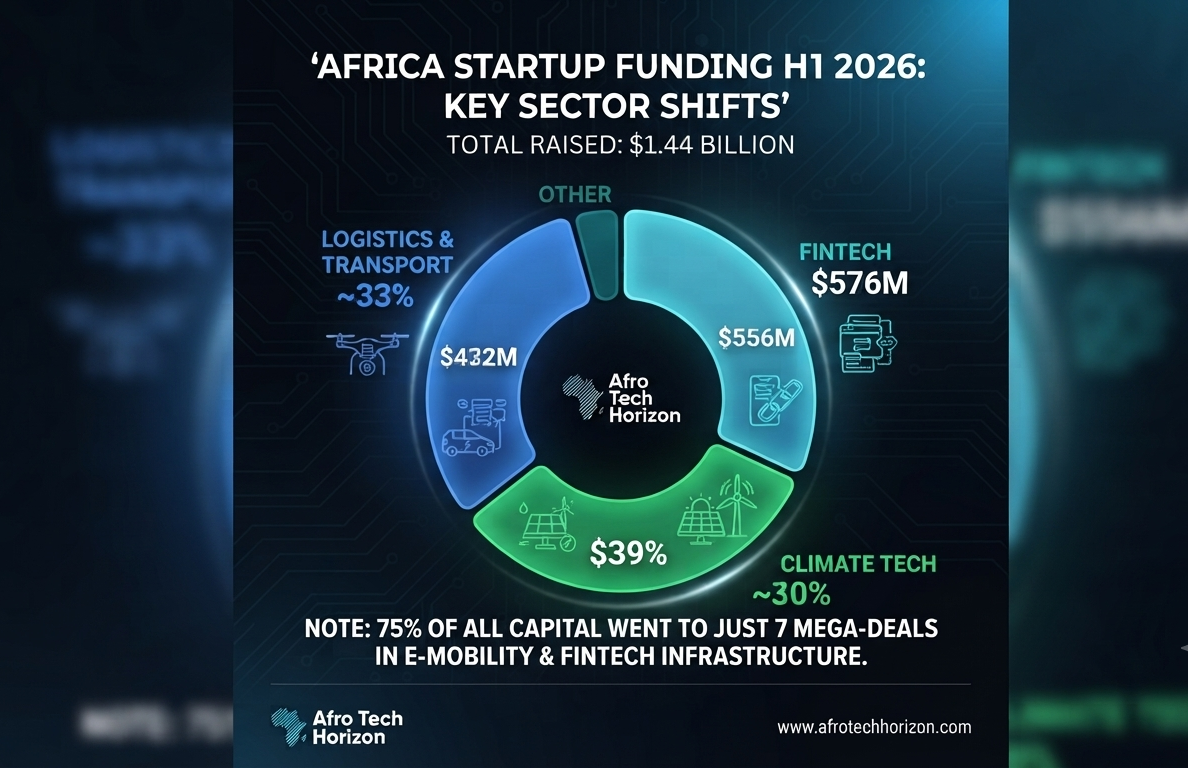
For years, fintech sat undisputed at the absolute peak of the African venture landscape. While fintech remains a critical pillar within Africa startup funding H1 2026 (capturing $556 million), logistics, transport, and climate tech captured an unprecedented share of the continent’s total capital concentration.
The primary driver of this shift was electric mobility heavyweight Spiro, which secured over $327 million across landmark equity and debt rounds in the first half of the year alone. Because of massive physical asset plays like Spiro, tracking Africa startup funding H1 2026 reveals that logistics and transport hit $472 million, proving that investors are heavily favoring companies with real physical assets and utility-scale impact.
3. The Debt Revolution and Record-Breaking M&A
With equity harder to come by, founders and investors within the Africa startup funding H1 2026 cycle turned aggressively to alternative financial instruments. Debt financing surged to $614 million, accounting for over 42% of total capital raised. Startups are increasingly utilizing debt and asset-backed securitization to scale operations without diluting founder equity.
Simultaneously, the exit and consolidation market reached record highs. Africa recorded 63 M&A transactions in H1 2026, more than double the volume seen in the previous year. High-profile acquisitions, such as Flutterwave acquiring Mono, signal that strategic consolidation has become a core mechanism within Africa startup funding H1 2026.
The Horizon Ahead
As we look toward the second half of the year, tracking Africa startup funding H1 2026 teaches founders and tech leaders a clear lesson: scalability must be backed by structural substance. Investors are no longer funding promises; they are backing resilient business models, hard infrastructure, and clear paths to profitability.
The African tech ecosystem isn't slowing down it is growing up.